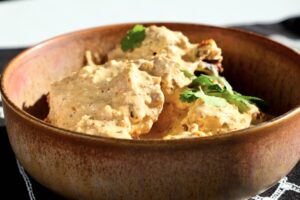
Authentic Adjarian Yakhni Recipe – How to Make Georgian Beef and Walnut Stew
Yakhni is not just a dish — it’s an entire category of slow-cooked stews that spans cultures and borders. The word yakhni has Turkish roots and originally referred to a rich meat stew from Asia Minor. Over time, yakhni recipes have spread and evolved across the region, with different countries adapting them to their own culinary traditions. You’ll find versions in Turkey, Greece, Romania, Bulgaria, and, of course, Georgia — each one a little different.

Here in Adjara, on Georgia’s Black Sea coast, yakhni has taken on a unique local identity. I live near Kobuleti, and the Kobuletian yakhni is a quiet regional specialty — a comforting stew made with beef, walnuts, and traditional Ajarian spices. Unlike many other yakhni recipes that use veal or lamb, this one features mature beef and no tomatoes, giving it a deep, nutty flavor that sets it apart.
I’ve always been curious about how this particular version of yakhni ended up in a small resort town by the sea. While its origins trace back to Asia Minor, the Kobuletian adaptation feels entirely its own — slow-cooked beef simmered with ground walnuts, dry red capsicum, utskho suneli, coriander, and Imeretian saffron (dried marigold petals). The result is a rich, warmly spiced stew that unfolds slowly with every bite.
If you’ve been looking for a traditional yet distinctive yakhni recipe, or wondering how to make yakhni with Georgian flavors, this is the one to try. It’s deeply local, incredibly satisfying, and perfect for slow afternoons with a piece of warm bread in hand.
Adjarian Yakhni Recipe

Ingredients
- 800 g Beef preferably chuck or brisket
- 100 g Butter
- 2 medium Onions finely chopped
- 250 g Walnuts
- 3 cloves Garlic
- 1 whole Dry red chili seeds removed
- Salt – to taste
- 1 tsp Ground coriander seeds
- 1 tsp Utskho suneli blue fenugreek
- 2 tsp Zafrana Imeretian saffron / dried marigold petals
- Water – enough to just cover the beef
Instructions
- Start with the beef: Cut the beef into medium chunks. In a large pot, melt the butter over medium heat. Add the beef and sear on all sides until browned and fragrant. Don’t rush this — it builds the base of the flavor.
- Add the onions: Toss in the chopped onions and cook until soft and golden, stirring occasionally.
- Bloom the saffron: Crumble in the dry red capsicum and add the zafrana (Imeretian saffron). Stir for 30 seconds to release their aromas.
- Simmer the stew: Add just enough water to cover the beef. Season with salt. Bring to a boil, then reduce the heat to low, cover, and let it simmer for 1.5 to 2 hours, or until the beef is very tender.
- Walnut-spice paste: While the beef simmers, grind the walnuts together with the garlic into a smooth paste. Then mix in the coriander, utskho suneli, and remaining zafrana.
- Finish the dish: Once the meat is tender, stir the walnut-spice mixture into the pot. Simmer for another 10–15 minutes uncovered, stirring occasionally, until the sauce thickens and glistens.
- Taste and adjust: Add more salt if needed. The flavor should be rich, nutty, and fragrant with a whisper of spice.
Notes
- Toasting the walnuts enhances their flavor, but it’s optional.
- Serve with mchadi (Georgian cornmeal cakes), tonis puri, or lavash to scoop every last drop.
- No utskho suneli? There’s no perfect substitute, but a small mix of fenugreek and a pinch of thyme gets close-ish.