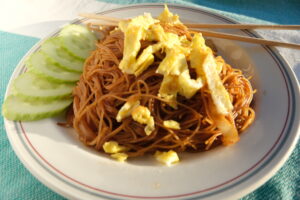
Kuksi Recipe: Korean-Uzbek Cold Noodle Soup

If you’re searching for the perfect kuksi recipe, you’ve come to the right place.
Chewy noodles, crisp veggies, and a tangy chilled broth — Kuksi is pure refreshment in a bowl. This Korean-Uzbek classic mixes spicy, sour, and sweet so perfectly that once you try it, you’ll crave it every summer.
This isn’t the delicate Japanese somen or a minimalist soba. Kuksi comes from the Korean-Uzbek diaspora and is all about abundance. It borrows the structure of a soup and loads it up with spiced stir-fried beef, garlicky cabbage slaw, vinegared cucumbers, daikon salad, spicy pepper oil, and even a tangle of egg crepe noodles. It’s a dish with layers of stories—about migration, adaptation, and keeping culinary memories alive through heat and cold, spice and comfort.
Love cold noodles and bold flavors?
Get my free 5-Day Global Dinner Plan — five easy weeknight dinners from around the world, including fresh, bright Asian recipes like this one.
[Sign up here to get your copy →]
I do not even remember when was the the first time I had kuksi. A huge bowl with so many toppings I didn’t know where the soup was. One spoon in, I understood. This is refreshment, flavor, and texture at once. There is no single kuksi recipe, but the one I share here is the one that has become a staple in my summer kitchen.

Kuksi is part of the rich culinary tradition of the Koryo-saram—ethnic Koreans who settled in Central Asia during the 20th century. Their cuisine is a unique blend of Korean techniques and flavors with local Uzbek and Russian influences, shaped by history, migration, and resilience. If you’re curious about other Koryo-saram dishes or regional fusion recipes, check out my posts on Funchosa. Or if you like Korean food definitely try Japchae recipe or Kimchi pancakes!
Love chilled, flavor-packed noodle dishes like this Kuksi? You’ll enjoy my free 5-Day Global Dinner Plan, featuring simple recipes from Thailand, Georgia, India, Vietnam, and Hungary. Download the plan →
Kuksi has a bright, refreshing taste — the broth is light but savory, the noodles are chewy, and the toppings add crunch, spice, and tang. It’s cooling like a salad, but still filling like a noodle soup.
Absolutely. Omit the beef/stir-fried meat; boost the veggies. Use mushrooms (shiitake, oyster) or firm tofu as a protein sub. Use vegetable stock or simply salt + soy/vinegar in the broth.
You may also cook:
- Funchoza – Korean Glass Noodle Salad
- Tom Yum Soup – Thailand’s Spicy Classic
- Georgian Creamy Chicken – Garlic Yogurt Sauce Style
Craving more chilled noodles or warm broth comfort? These three cover both moods perfectly.
Korean Cold Noodle Soup Kuksi (Kuksi Guksu)

Ingredients
For the Soup Base (Kuksi Muri)
- 5 liters cold water
- 2 tbsp soy sauce
- 4 tbsp salt
- 10 –12 tbsp sugar
- 1.5 tbsp 70% vinegar adjust to taste
- 1 tbsp minced garlic
- 2 tomatoes 200 g, grated or blended
- 150 ml cucumber juice
- Chopped fresh herbs: green onions dill
For the Pepper Oil (Zazharka)
- 300 g onion thinly sliced
- 100 ml neutral oil
- 2 tbsp ground red pepper
- 1.5 tbsp minced garlic
For Cabbage Salad (Kapusta-Cha)
- 1200 g cabbage finely shredded
- 1 tbsp salt
- Black pepper to taste
- 1 tsp ground coriander
- 1.5 tbsp sugar
- 1 tsp vinegar 70%
- 2 tbsp chopped herbs
- 3 –4 tbsp pepper oil
For Cucumber Salad (Ogurtsy-Cha)
- 1100 g cucumbers thinly sliced
- 1 tbsp salt
- Black pepper to taste
- 1 tsp ground coriander
- Herbs
- 3 tbsp pepper oil
For Daikon Salad (Muki-Cha)
- 1200 g daikon julienned
- 1 tbsp salt
- 1.5 tbsp sugar
- Black pepper
- 1 tsp coriander
- 1.5 tsp vinegar
- 2 tbsp herbs
- 3 –4 tbsp pepper oil
Stir-Fried Beef
- 900 g beef thinly sliced
- 60 ml oil
- 200 g onion
- 1 tbsp garlic
- Black pepper
- 1 tsp coriander
- 2 tbsp soy sauce
- 1 tbsp oyster sauce or sub salt
Stir-Fried Peppers
- 250 g chili peppers medium heat
- 100 g onion
- 4 –5 tbsp oil
- 300 g tomatoes
- 1 tbsp garlic
- Black pepper
- 1 tsp coriander
- 1 tbsp sugar
- 1 tbsp ground red pepper
Egg Noodles (optional but traditional)
- 6 –7 eggs
- 0.5 tsp salt
- 2 tbsp oil
Instructions
Step 1: Make the Soup Base
- In a large container, combine water, soy sauce, salt, sugar, vinegar, garlic, blended tomatoes, cucumber juice, and herbs.
- Mix well and refrigerate until completely chilled. This is your kuksi broth.
Step 2: Prepare the Pepper Oil
- Heat oil in a pan over medium heat.
- Add sliced onions and fry until golden.
- Add minced garlic and ground red pepper, stir for 15–20 seconds, and take off heat.
Step 3: Make the Cabbage Salad
- Sprinkle shredded cabbage with salt and massage until soft.
- Add pepper, coriander, sugar, vinegar, herbs, and pepper oil. Toss well. Let marinate.
Step 4: Make the Cucumber Salad
- Salt sliced cucumbers and let sit for 10 minutes.
- Drain excess liquid. Add pepper, coriander, herbs, and pepper oil. Mix and chill.
Step 5: Make the Daikon Salad
- Combine julienned daikon with salt, sugar, pepper, coriander, vinegar, herbs, and pepper oil.
- Toss and let marinate in the fridge.
Step 6: Stir-Fry the Beef
- Heat oil in a large skillet or wok.
- Add beef and sear until browned.
- Add onion and cook until soft.
- Stir in garlic, spices, soy sauce, and oyster sauce. Cook until caramelized.
Step 7: Stir-Fry the Peppers
- Heat oil and sauté onions and peppers until soft.
- Add chopped tomatoes, garlic, spices, and sugar. Cook until thick and jammy.
Step 8: Make the Egg Noodles
- Beat eggs with salt.
- Cook thin omelets in an oiled non-stick pan.
- Cool, roll up, and slice into thin strips.
Step 9: Assemble the Kuksi
- Place noodles in chilled bowls.
- Pour cold kuksi broth over the noodles.
- Top with portions of each salad, beef, and pepper mixture.
- Garnish with fresh herbs and extra pepper oil.
- Mix well and enjoy cold.
Planning next week’s dinners? Get my free 5-Day Global Dinner Plan →